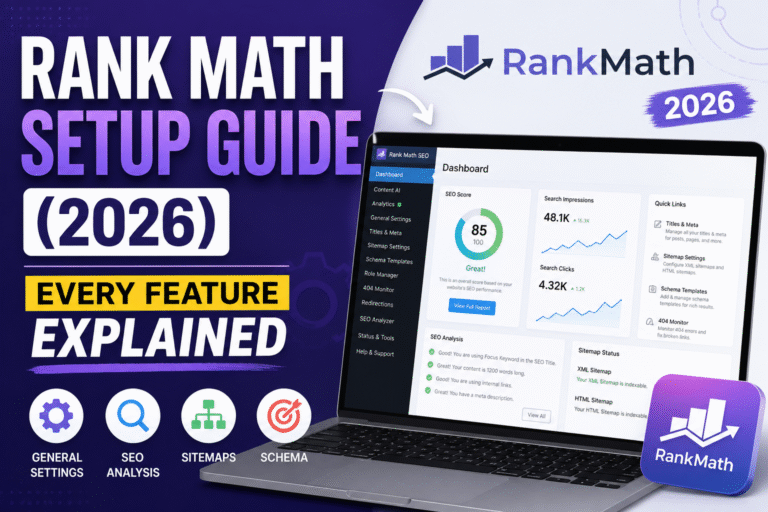
SEO Framework and Rank Math are two popular tools for managing SEO on WordPress sites. Both offer features like keyword optimization, sitemap generation, and site analysis. The main difference is that SEO Framework focuses on simplicity and automation, while Rank Math provides more customization and detailed control.
People who want a set-it-and-forget-it approach might prefer SEO Framework. Those who like to tweak settings for different pages usually choose Rank Math. Understanding these differences helps users pick the right tool for their needs.
Overview of SEO Framework
SEO Framework is designed to provide a clean, efficient way to optimize websites. It focuses on essential SEO tasks without unnecessary clutter. Its features, user experience, and compatibility with other tools make it stand out in the SEO plugin market.
Core Features
SEO Framework offers essential SEO tools like automatic meta tags generation, sitemap creation, and rich snippet support. It focuses on speed and minimalism, avoiding heavy scripts that can slow websites down. The plugin includes features such as nofollow control, canonical URL settings, and local SEO options.
It also has built-in spam detection to reduce unwanted link recommendations. Its automated settings adjust based on the website’s needs, allowing more experienced users to customize while beginners can rely on smart defaults. This balance makes it a flexible tool for different skill levels.
Ease of Use
The interface is simple and intuitive. Users find it easy to set up without needing advanced knowledge. The plugin uses clear labels and helpful explanations, so site owners understand what each setting does.
Automatic configuration helps reduce time spent tweaking options. It minimizes notifications and keeps workflows clean. For users who want more, advanced settings are available but hidden by default to keep the interface uncluttered.
Supported Integrations
SEO Framework works well with popular content management systems like WordPress. It also supports integration with caching plugins to prevent conflicts. The tool can connect with common analytics and webmaster tools through standard methods.
It does not include many built-in third-party connectors but easily works alongside plugins like WooCommerce and page builders. Developers can add custom integrations via hooks and filters if needed. This flexibility makes it adaptable to many website environments.
Overview of Rank Math
Rank Math is a popular WordPress SEO plugin that helps users improve their website ranking. It offers various tools for on-page SEO, content analysis, and technical settings. The plugin is known for its detailed features and ease of use.
Key Functionalities
Rank Math provides a range of SEO tools like keyword optimization, XML sitemap creation, and rich snippet support. It allows users to target multiple keywords per post, which helps improve search visibility. The plugin also offers automated SEO audits and suggestions to fix common errors.
Users can integrate it with Google Search Console to track website performance. The built-in 404 monitor and redirection manager help maintain healthy site URLs. Rank Math supports local SEO, WooCommerce SEO, and social media integration, making it suitable for different types of websites.
User Experience
Rank Math has a clean and intuitive interface designed for both beginners and experienced users. Its setup wizard simplifies configuration by guiding through important SEO settings step-by-step. Users can access helpful tooltips and explanations directly inside the dashboard.
The plugin organizes SEO data neatly with tabs such as General, Advanced, and Social, which helps users find settings easily. Real-time content analysis shows suggestions to improve SEO as content is written. This feature keeps users focused on optimizing every page or post.
Plugin Compatibility
Rank Math works well with most major WordPress themes and plugins. It supports popular page builders like Elementor, Beaver Builder, and Divi without conflicts. The plugin updates regularly to maintain compatibility with the latest WordPress versions.
It also integrates with e-commerce plugins like WooCommerce to optimize product pages. Rank Math can coexist with caching and security plugins without affecting site performance. This compatibility helps users avoid technical issues while improving SEO across their website.
Comparative Analysis
Both SEO Framework and Rank Math offer tools to improve website SEO but differ in focus and features. They vary in how much control they give users and how they affect website speed.
SEO Capabilities
The SEO Framework focuses on core SEO essentials with minimal setup. It handles meta tags, sitemaps, robots.txt, and schema markup automatically. Its AI-based system adjusts optimizations without much user input, which suits beginners or those wanting simple SEO.
Rank Math provides more in-depth SEO tools. It includes keyword tracking, rich snippets, local SEO, and WooCommerce support. Users can manage multiple keywords per post, which helps rank for various search terms. Rank Math appeals to more advanced users wanting detailed control.
Customization Options
SEO Framework offers fewer options but keeps controls clear and easy to find. It limits customization to avoid mistakes often made by beginners. Users can still tweak metadata and disable features, but the approach is more “set it and forget it.”
Rank Math gives extensive customization. Users can configure each SEO element, from meta tags to advanced schema, and use modular features to enable or disable parts as needed. This flexibility helps power users fine-tune SEO strategies but can be overwhelming for novices.
Performance Impact
SEO Framework is designed to be lightweight. It runs minimal background tasks and uses clean code, helping maintain fast site loading times. This makes it a good choice for users who prioritize site speed alongside SEO.
Rank Math is more resource-heavy due to many features and background processes. While it offers caching and optimization options, its complexity can slow down some sites, especially on shared hosting. Users may need additional speed optimization plugins to counter this effect.
On-Page Optimization Tools
Both SEO Framework and Rank Math offer tools that help improve webpage content to rank higher in search results. They focus on different aspects like analyzing text, adding structured data, and automating repetitive tasks.
Content Analysis
Rank Math provides detailed content analysis based on target keywords. It checks how well the text matches the keyword by looking at keyword density, readability, and use of related terms. It also offers suggestions for improving title tags, meta descriptions, and headings to boost SEO.
The SEO Framework has a simpler content scoring system. It highlights key SEO elements but does not offer as many specific tips. It focuses more on ensuring basics like proper title length and keyword use are followed rather than deep content audits.
Schema Markup
Rank Math supports extensive schema markup options. It lets users add rich snippets like reviews, events, and products easily. This can improve how search results appear with extra details, which may increase click rates.
SEO Framework includes automatic schema markup but with fewer customization options. It mostly adds basic article or page schemas without requiring user input. This helps users who want simple markup without extra setup.
Automation Features
Rank Math automates many optimization tasks. It can auto-generate meta tags, detect and fix broken links, and create XML sitemaps. These features reduce manual work and help maintain SEO health.
SEO Framework focuses on set-and-forget automation. It configures core SEO settings by default and updates sitemaps automatically, but it offers fewer automated tools compared to Rank Math. This makes it less hands-on but more straightforward.
Technical SEO Support
Both SEO Framework and Rank Math offer tools to help with key technical SEO tasks. These include creating sitemaps, managing URLs to avoid duplicate content, and controlling what search engines index. Their features vary in ease of use and customization options.
XML Sitemaps
SEO Framework automatically generates XML sitemaps with minimal setup. It updates sitemaps as content changes and excludes private pages by default. Users can fine-tune the sitemap settings but customization is more limited compared to Rank Math.
Rank Math provides a more detailed sitemap configuration. It allows users to include or exclude specific content types, taxonomies, and even individual posts or pages. It also supports image sitemaps and can handle advanced options like priority and change frequency tags.
| Feature | SEO Framework | Rank Math |
| Automatic generation | Yes | Yes |
| Custom content include/exclude | Basic | Advanced |
| Image sitemaps | No | Yes |
Canonical URLs
SEO Framework automatically sets canonical URLs to prevent duplicate content issues. It manages canonical tags well with little user input needed. This ensures search engines understand which version of a page to index.
Rank Math gives more control over canonical tags. Users can override or disable canonical URLs per post or page. It also supports canonical URLs for custom post types and taxonomies, allowing deeper optimization.
| Feature | SEO Framework | Rank Math |
| Auto canonical tags | Yes | Yes |
| Manual override | Limited | Full per page/post control |
| Support for custom types | Basic | Extensive |
Indexing Controls
SEO Framework lets users easily control noindex settings at the post, page, or taxonomy level. It simplifies setting pages to noindex to stop search engines from indexing them.
Rank Math also provides detailed indexation control. It includes options for noindex, nofollow, and noarchive settings. Users can manage these globally or individually, and even control indexing of archives like authors and date pages.
| Feature | SEO Framework | Rank Math |
| Basic noindex control | Yes | Yes |
| Advanced index controls | Limited | Yes |
| Archive page indexing | Basic | Extensive |
Pricing and Licensing
Both SEO Framework and Rank Math offer free and paid options. Their pricing models are designed for different user needs. Licensing rules and included features vary between the two.
Free Versus Premium
SEO Framework offers a free version with essential SEO tools. The Premium version costs $7 per month for a single site. It adds advanced features like local SEO, sitemap control, and SEO insights.
Rank Math’s free plan includes many features usually found in paid plugins. The Pro plan starts at $59 per year for one website. It provides more tools for e-commerce SEO, keyword tracking, and schema markup.
Free versions of both plugins cover basic SEO needs. Premium plans unlock more detailed controls for larger or more complex sites.
Value for Money
SEO Framework charges a flat monthly fee with no tier limits. This suits users who want a simple price and clear upgrades.
Rank Math offers yearly subscriptions with tiered pricing based on the number of sites. This can be cheaper for single sites but more expensive as sites grow.
Both plugins often run promotions, so final costs may vary. Users should consider how many websites they manage and which premium features they need before choosing.
User Support and Community
User support and community resources vary between SEO Framework and Rank Math. Both offer detailed guides, active communities, and direct support channels, but they differ in their approach and depth of coverage.
Documentation Quality
SEO Framework provides clear and concise documentation. It focuses on simplifying SEO concepts with step-by-step instructions and screenshots. Users find it easy to follow, especially beginners.
Rank Math offers more extensive documentation. It covers advanced SEO topics in detail and includes tutorials, video guides, and FAQs. The docs are well-organized but may feel overwhelming for new users.
Both plugins update their documentation frequently to match new features and SEO trends. SEO Framework leans toward simplicity, while Rank Math aims for thoroughness.
Community Engagement
Rank Math has a larger user community due to its popularity and free feature set. It has active forums on WordPress.org, social media groups, and regular webinars. Users often share tips and troubleshooting advice there.
SEO Framework’s community is smaller but focused. It uses its own support forums and GitHub for discussions. The community values stability and minimalism over extensive customization.
Users needing quick peer support may find Rank Math’s larger community helpful. Those preferring a quieter, technical environment might appreciate SEO Framework’s community.
Customer Assistance
Rank Math offers free support via their website and WordPress forums. They also provide premium plans with faster, personalized help. Support covers setup, troubleshooting, and SEO strategy.
SEO Framework provides support primarily through their website’s tickets system and community forums. Support is available for both free and paid users, but premium comes with faster response times.
Both plugins have support teams familiar with SEO issues. Rank Math’s assistance is more automated and broad, while SEO Framework’s help is more hands-on and focused on technical support.
Conclusion:
SEO Framework and Rank Math both enhance WordPress SEO but cater to different user needs. SEO Framework is ideal for those who prefer simplicity and automation, while Rank Math suits users looking for detailed control and customization. Choosing the right plugin depends on your comfort level with SEO tools and how hands-on you want to be.